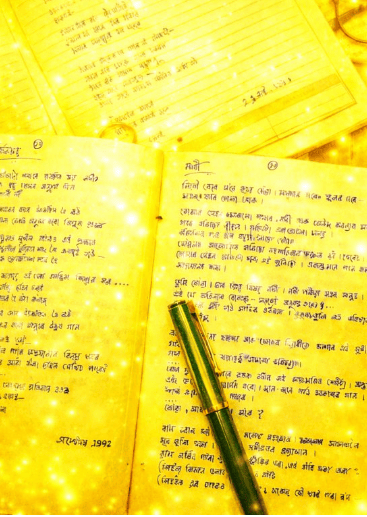
The Confession
One day,
sitting inside a square of sunlight,
I wanted to make time my own.
I may even have imagined
myself as time—
everyone kept telling me
to return.
The wind was moving.
Within that breath
every door of time swung open.
The womb of celebration rang,
and autumn’s careful designs
crowded the indulgent mind.
… I wanted to become a pilgrim—
doesn’t that sound strange? …
Everyone handed me
one worn image each.
The river shivered in the wind.
In the breath of the season of love
the seasons gathered.
I longed to unlearn
speech’s covenant;
tree-like, generous words
covered my withered hands.
… I emptied myself of words—
doesn’t that sound strange? …
Each one gave me
a broken mirror.
The two of us
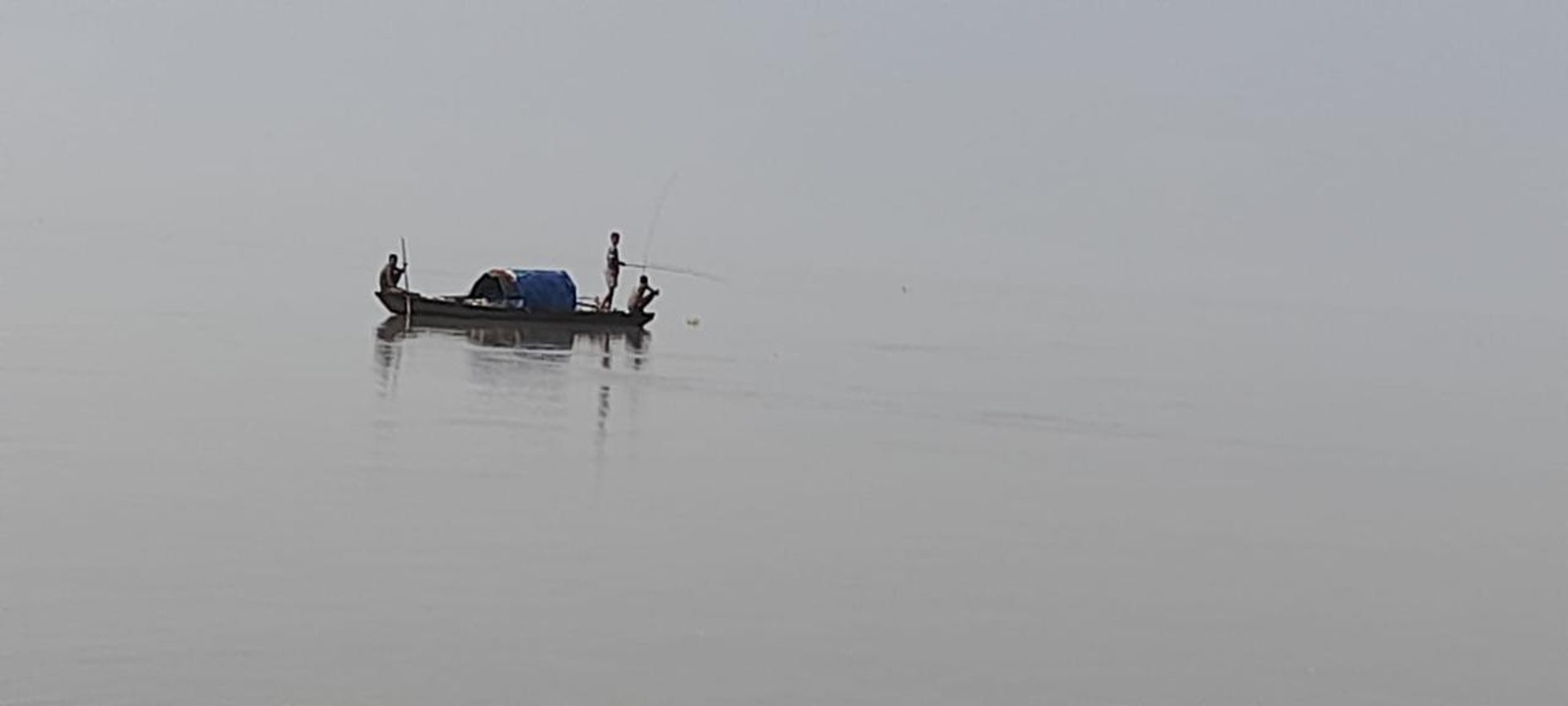
stepped into the water.
A scatter of small fish laughed,
offering us
two kisses apiece.
Their mother was tender;
their rustic father
had left long ago.
… I wished to become
a small red fish, silver-scaled …
Quietly, each one
took part
in arranging my last fire.
______________________________________________
January 1991
Mrinal Bhuiyan Memorial First Prize, 1992 (Cotton College)
First published: Pashek, Rongali Bihu Issue, 1993
Editor’s Note
The Confession is a poem about voluntary unmaking. It traces a moment when the speaker loosens hold on time, language, and identity, not as loss alone but as a deliberate gesture—an attempt to step outside inherited meanings. The repeated refrain “doesn’t it sound strange?” signals both wonder and unease, marking the gap between inner desire and social response.
What is given away returns in distorted forms: photographs replace lived memory, broken mirrors stand in for recognition, and the wish for transformation ends in preparations for erasure. The poem moves from light and openness toward an ending that is quiet, final, and ritualistic.
Confession records a passage—from speech into silence, from selfhood into exposure—where transformation is inseparable from disappearance.
Select language
© 2026. All rights reserved.




Reach out for questions & collaboration
+91-9954060665