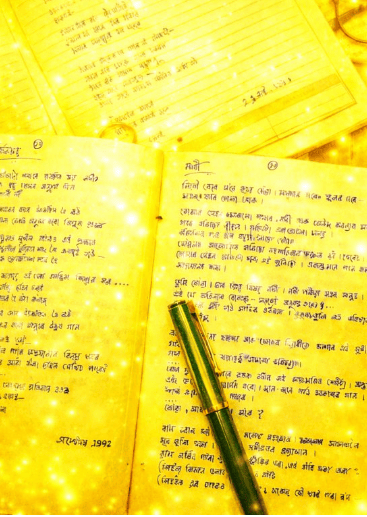
Time’s Beloved Stanzas
The heart’s quiet favourite — the last dream within a dream
(a)
Do you recall—
that winter afternoon, when we sat as one?
From rain-drenched flesh
a quiet warmth rose,
the way night teaches a flower
the art of blooming.
We sat so near—utterly near—
thinking that, if grace allowed,
we might grow untouched by touch,
each kept intact by the other.
Do you recall—
how we went near those hills,
fearing they might startle us,
and tucked the sun away
in the fold of your hair?
As birds turned homeward
we stayed, caught in whispered disputes.
They left us a tender dream—
red, like ripened tomatoes…
Do you recall—
how, one day, unseen by the world,
we loosened ourselves from each other,
for departure found no hour
willing to receive it.
Surely
we both remember it all.
(b)
We had sworn—
that we would sing
the moment the flute drew breath.
We had sworn—
to keep to the river’s verge,
unhurried,
letting time fold itself
silently, hand in hand.
Like the hands of a broken clock,
our words slipped their souls.
Like a dream that startles you awake,
our songs were worn away
at every bend of the river.
Within the hush of this illusory world
we lost
the warm, breathing hours of time.
A curse—yes, a curse—
each journey condemned from the start.
(c)
When the storm had finished
unmaking the world,
the emptied vessel of memory
ran over.
Unaware—ever unaware—
I drifted to the farthest edge of the world
and watched the wind
gently disrobe
the tender emotions of early winter.
Now—
a sun-filled afternoon
lies still
within a lifeless temple.
Silence listens.
Wanderer, wanderer—
who can tell,
who knows where all is lost
within your eloquence?
Epilogue
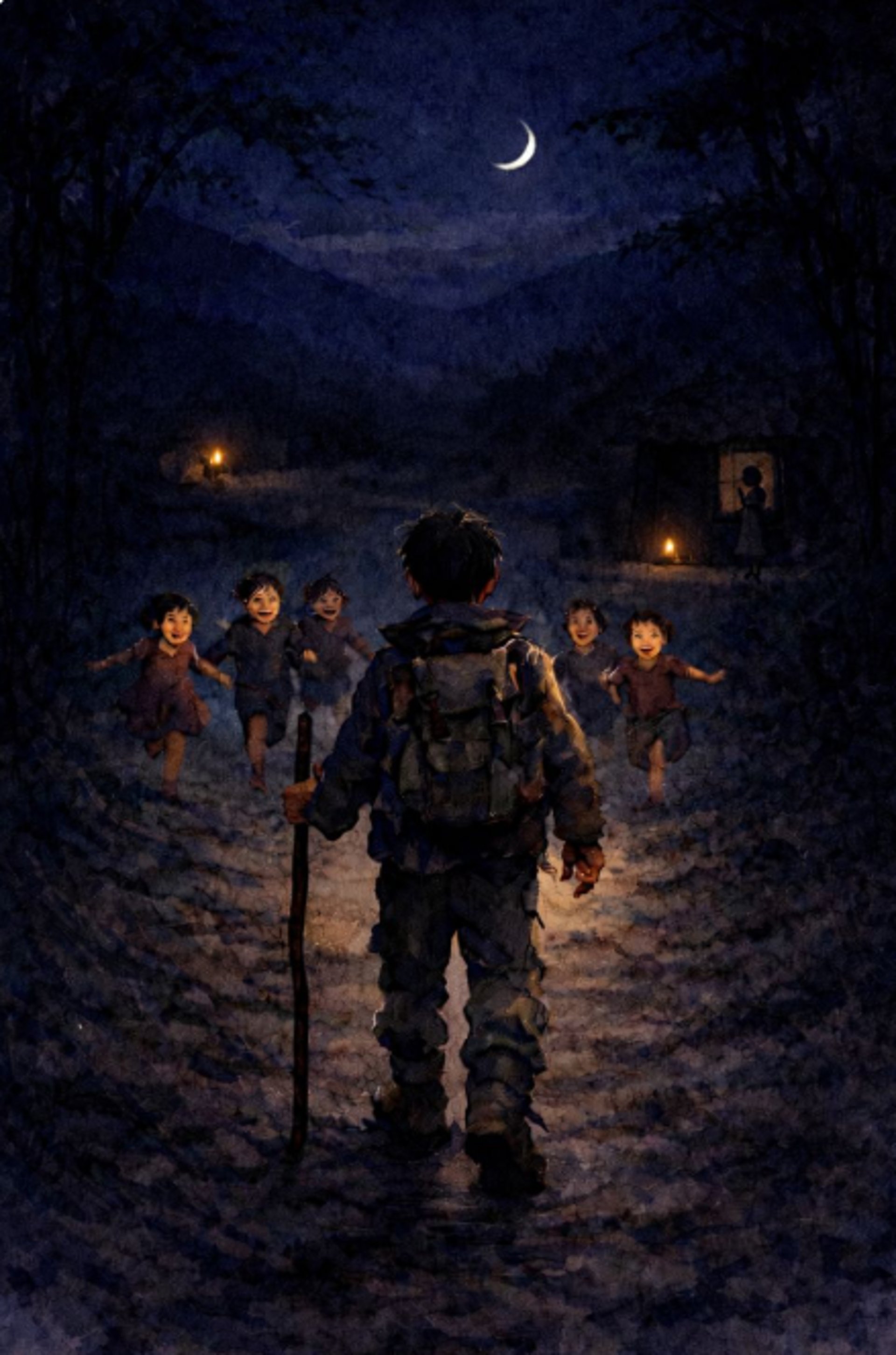
I will return—
as a quivering tune,
hand in hand with unclothed children,
and search for
the wings of butterflies
and the lightless
clock of time.
_________________________________
January 1991
First published: Sutradhar, April 1991
Editor’s Note
Time’s Beloved Stanza is a poem of remembrance shaped by intimacy, loss, and historical fatigue. Memory here is not recollection alone but a shared terrain—where bodies, weather, birds, rivers, and promises once converged. The opening sections dwell in a fragile closeness, where desire approaches but resists fulfillment, preserving tenderness through restraint.
As the poem moves forward, time fractures. Promises decay into silence, songs are erased, and journeys become cursed. The broken clock becomes a central metaphor—time no longer enabling movement, but disabling voice itself. What is lost is not love alone, but fluency: the ability to inhabit time meaningfully.
The final movement inhabits dislocation—after storm, after speech, after shelter. Eloquence becomes estrangement; language itself loses address. Yet the epilogue refuses despair. Return is imagined not as recovery of the past, but as transformation: into melody, into play, into a childlike search for what still flutters and ticks beyond productivity and brilliance.
The poem ultimately suggests that while history and adulthood exhaust meaning, survival lies in rhythm, touch, and the unlit clock of time—where wonder persists without promise.
Select language
© 2026. All rights reserved.




Reach out for questions & collaboration
+91-9954060665